
U.S. Critical Systems Face a Week of Disruptions
The FAA ground stop was no cyberattack, but it showed what aging systems and delayed modernization can put at risk.

A week of separate outages showed how critical systems can fail during routine upgrades and maintenance, while the public has little choice but to absorb the cost.
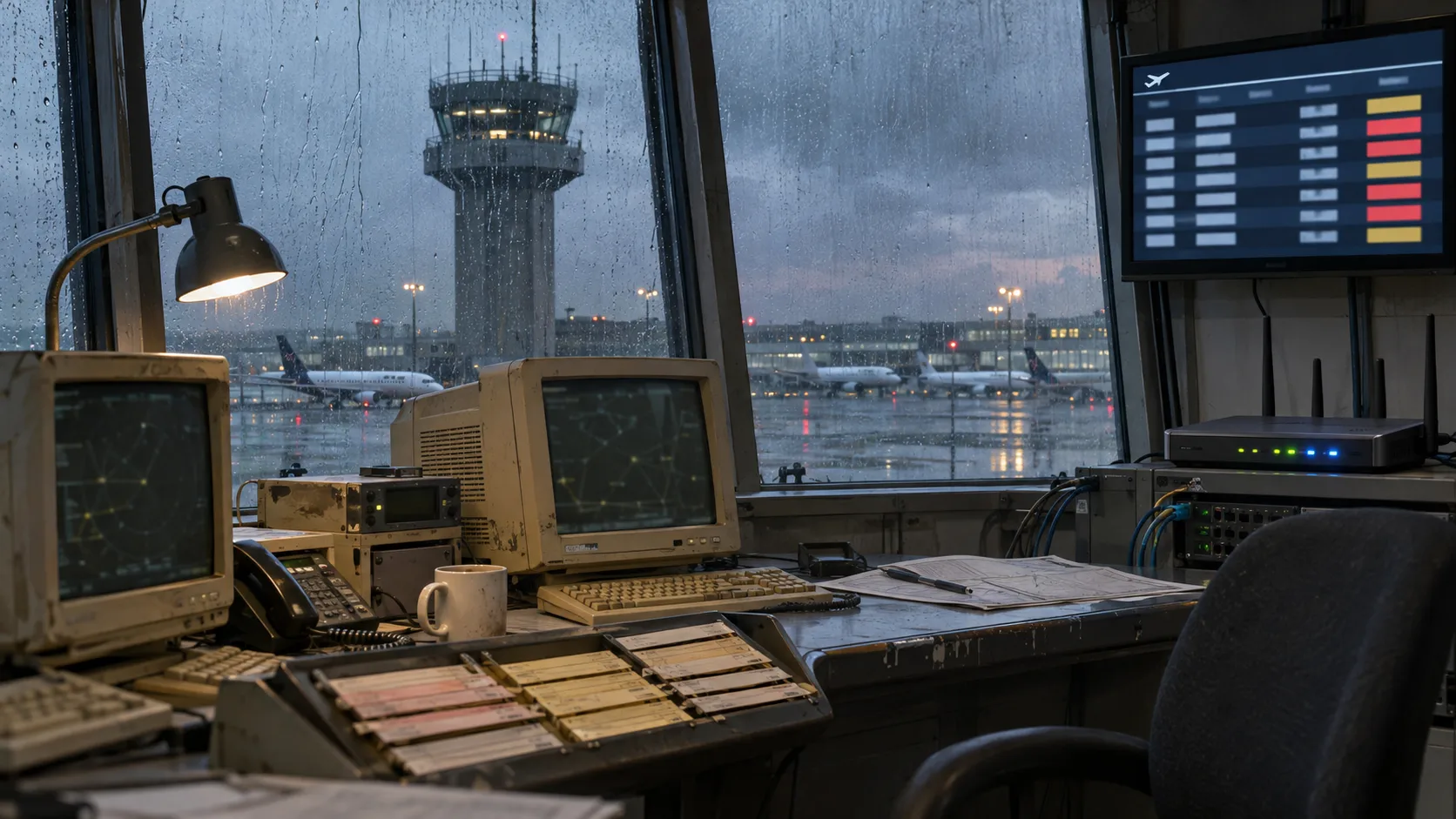
You don’t need a conspiracy to see the problem. On November 13, the FAA halted departures nationwide after a router replacement at a remote Arkansas site flooded its network. The agency said 17 of 22 air route centers became unstable. The stop lasted more than four hours, the longest since 9/11, and about 12,462 flights were canceled that day. The FAA says not all cancellations were directly caused by the ground stop.
The failure hit a system already under scrutiny. The Government Accountability Office has warned for years that key air traffic control systems are aging and that modernization is slow and risky. Some controllers still use paper flight strips to track aircraft.
Other disruptions followed, but they weren’t one event. Microsoft reported a network-upgrade problem; JPMorgan, a software bug; and United, a computer problem. A separate malware campaign did compromise scripts used on sites belonging to 178 organizations. On November 17, the NSA reported that scheduled maintenance had temporarily degraded some internal systems, while mission-critical capabilities remained operational. Firefighters traced smoke at CIA headquarters to the HVAC system and found no fire. No evidence links these incidents.
These failures don’t prove a coordinated attack. They do show how much depends on systems that can stumble during upgrades, maintenance, or routine use. The FAA is the clearest case of government failure: when a federal monopoly falls behind, travelers can’t switch providers. Taxpayers deserve clear deadlines, transparent contracts, and accountability when modernization misses the mark.
Excerpt: A week of separate outages exposed a common weakness: critical systems can fail during routine upgrades, while the public has little choice but to absorb the cost.