
Show Us Your Face: Brazil’s New Price for a Phone Number

Anatel says facial recognition will stop scammers. What it will surely stop is anonymity, and Brazil has already seen what happens when the state decides who gets to stay connected.
Every Brazilian knows the message. It arrives on WhatsApp from an unknown number with a familiar profile picture, and it usually opens with some version of “Mom, I changed my number.”
Truth be told, most of us stopped being surprised by it a long time ago. Phone scams have become part of the country’s background noise, like traffic in São Paulo or rain in Recife in June.
I have no sympathy for the people who send those messages. I have even less for the idea that the cure is to photograph the face of every adult with a cell phone.
No face, no phone
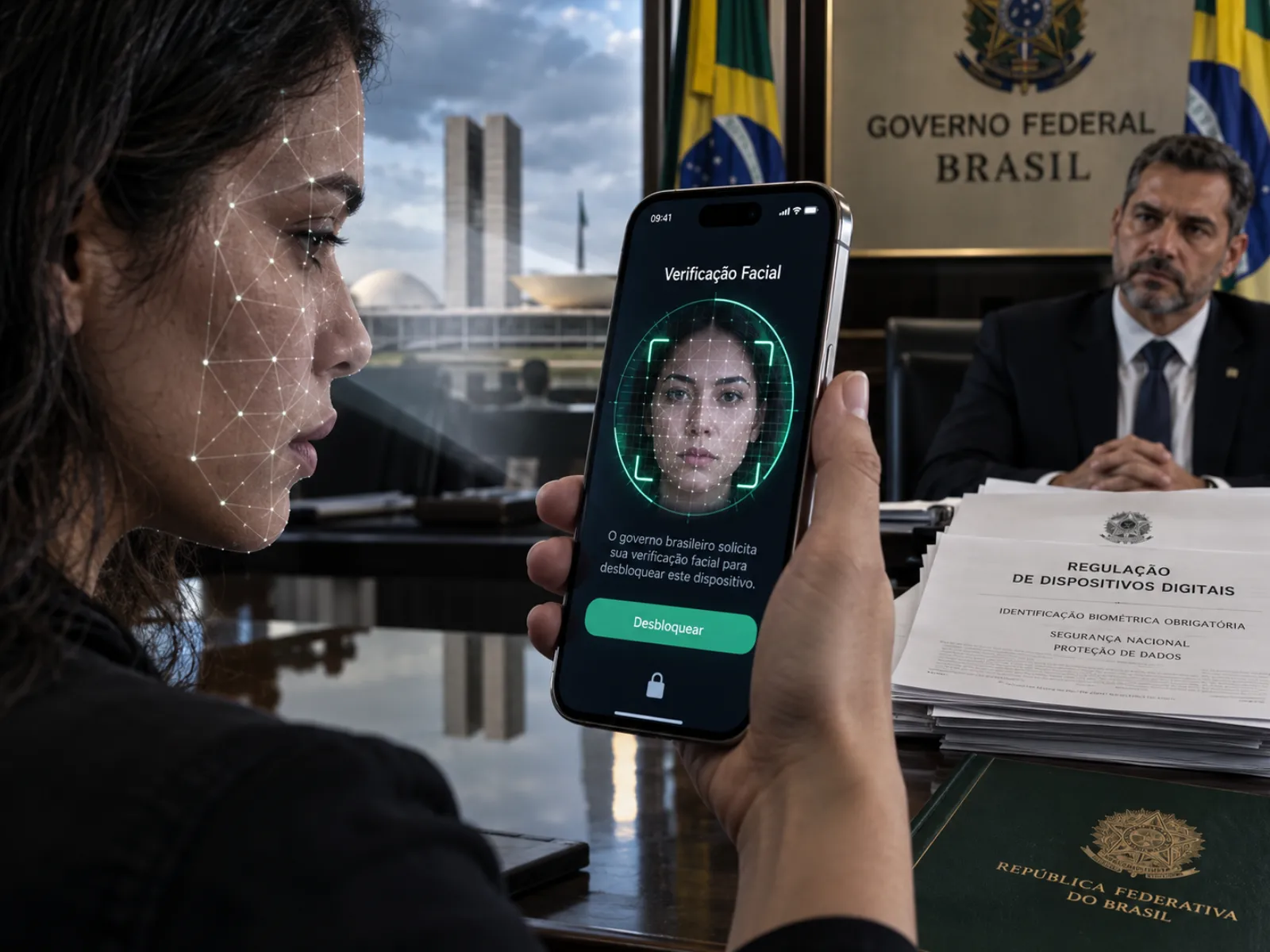
That is, more or less, what Anatel, Brazil’s telecom regulator, decided on October 28. Under the new rule, carriers will have to verify customers through facial recognition before they can activate a line, keep one active, port a number or swap a SIM card.
The check includes a liveness test, and the face is then compared against biometric databases that already exist, public or private.
New prepaid lines need it by September 30, 2027, and everything else follows by the end of that year. Those of us who already have a line, which means nearly everyone, must comply by the end of 2028.
From January 2029, unverified lines can be suspended for up to 120 days and then canceled. In plain terms: no face, no phone.
Brazil had 219.8 million active cell lines in June, more than the number of people living in the country. Each one of them is about to come with a face attached.
Don’t get me wrong, I understand the logic. Lines registered under fake or borrowed identities are the raw material of phone fraud, and since late 2021 anyone could activate a prepaid line straight from the handset.
The rule was drafted by a technical group dedicated to fighting scams, and it passed by consensus. Nobody involved is a cartoon villain.
The front door to everything
The problem is what a phone number has become. In Brazil, it is the front door to everything.
It opens your WhatsApp, receives the codes for your bank, logs you into government services and anchors almost every social media account you own. Tie that number to a verified face, and you have tied nearly everything a person says online to that face as well.
Our 1988 Constitution already forbids anonymity in the expression of thought. For decades, that line was mostly a principle, because the state lacked the means to enforce it on a national scale.
Anatel is now building those means, one face scan at a time.
We have seen this switch before
Context matters here. In 2024, a Supreme Court justice ordered X offline across Brazil for 39 days after the company refused orders to take down accounts and failed to name a legal representative in the country.
Anatel was the agency that told internet providers to pull the plug. Anyone caught using a VPN to get around the block faced a fine of R$50,000 per day.
I am not saying Anatel plans to use our faces against anyone. I am saying that tools outlive the people who build them, and good intentions are not a security protocol.
A shaky record on data
Then there is the small matter of keeping the data safe. In 2021, records tied to 223 million CPFs, more than the living population at the time, were put up for sale online.
Weeks later, a separate base with over 100 million cell phone numbers surfaced, allegedly taken from two of the country’s biggest carriers.
The LGPD, our data protection law, was already in force. The new rule requires carriers to follow it. Forgive me for not feeling reassured.
Someone will also have to pay for all of this. Carriers must build systems to verify identities, flag fraud attempts and keep audit records, and no one has published an estimate of the cost.
That bill will not be mailed to Anatel.
The scammers will adapt
As for the scammers, they will adapt, as they always do. Brazil already has a word for people who lend their names to criminals: laranjas.
It does not take much imagination to picture a market for laranjas who lend their faces, too.
The criminals will find a way around the rule. The rest of us will be left with a face on file and a little less freedom than we had before.